Team Building Activities for Adults That People Actually Enjoy
Updated: 5 hours ago
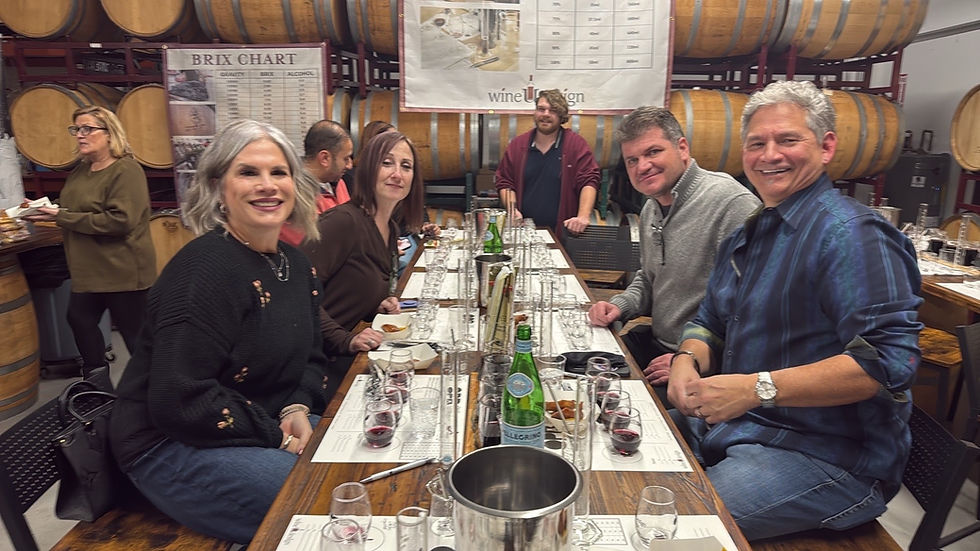
Adults take part in team building when it feels like a good afternoon out rather than a workshop they were sent on. The activities that work give colleagues a worthwhile task to share, put them in small mixed groups, skip the forced games and personal disclosures, and end with something people can take home. Get those four things right and most teams will join in willingly, whatever the activity. This guide covers what we have learned from running team building events in Hicksville since 2010, how to choose and plan the right activity on Long Island, and where wine blending fits in.
Table of contents
What have we learned from running team building for adults since 2010?
Why do so many team building activities fall flat with adults?
Which team building activity suits your team?
How do you plan team building on Long Island?
Where does wine blending fit?
Team building FAQs
Choosing team building your team will enjoy
What have we learned from running team building for adults since 2010?
The biggest lesson is that adults engage with a task, not a game. Ask a room of professionals to build a tower out of spaghetti and a good share of them will go along with it politely while watching the clock. Give the same people a table of barrel-aged wines and ask each group to create a blend they are proud of, and the conversation starts on its own, because the task feels worth doing and the result is theirs.
Small groups do the heavy lifting. We seat teams in groups of 6 to 12 per table, which is large enough for a proper debate and small enough that nobody can drift to the edge. When organizers mix departments across the tables, colleagues who only know each other from email end the session with a shared story, which is the whole point of team bonding activities in the first place.
Competition helps, as long as it stays friendly. Tables naturally compare their blends, and a little rivalry gives the quieter members of a team a way in: they may not lead the conversation, but they will happily defend the proportion of red they argued for. Most of our guests arrive with no wine knowledge at all, and that levels the field, because the senior manager and the new starter are learning at the same pace.
The research points the same way. A meta-analysis published in Small Group Research, Does Team Building Work?, combined 60 results and found that team building has a positive, moderate effect across team outcomes, with the strongest links to how people feel about their team and how they work together. That is a realistic expectation to set: a good activity improves how colleagues relate to each other, and that makes the day-to-day work easier.
Why do so many team building activities fall flat with adults?
Most team building that fails does so for predictable reasons. The first is activities that feel childish or pointless, such as trust falls or icebreaker games, which many adults quietly resent (let's be honest!). The second is forced personal disclosure, where people are asked to share more about themselves than they would choose to at work. Both make the least comfortable members of the team less likely to engage, which defeats the purpose.
The third is timing. An activity that takes up a Saturday or runs late into the evening feels like an extra obligation rather than a reward, particularly for colleagues with families or long commutes. The fourth is size: one large group lets people stay with the colleagues they already know, while a room of small mixed groups makes new conversations the default.
The last is expecting too much from a single event. A team with a serious conflict or unclear roles needs a manager's attention, not an afternoon out. Team building works best as a way to strengthen a team that is basically functioning, and it is worth being honest about that before you book anything.
Which team building activity suits your team?
Start with what you want the activity to achieve, then match the format to it.
If you want colleagues from different departments to get to know each other, choose a hands-on activity in small mixed groups, such as wine blending, a cooking class or a craft workshop. These formats give everyone a shared task and a natural reason to talk, and they work for people who would never start a conversation at a mixer. A cooking class is the better choice if a large share of the team does not drink.
If you want to sharpen how an existing team solves problems together, a structured challenge such as an escape room or a scavenger hunt puts people under light pressure and shows how they communicate. These are strong on energy but lighter on conversation, so plan food or drinks afterwards to give people time to talk about what happened. For more relaxed formats aimed at thanking a team rather than building one, our guide to company outing ideas covers the options in more detail.
If you want the benefit to last beyond the day, choose an activity that ends with something to keep, such as a bottle of wine each table blended together. And if your team is hybrid or spread across sites, bring the activity to the office on a day when most people are already in, rather than asking everyone to travel.
How do you plan team building on Long Island?
Hold it during work hours if you can. A weekday afternoon signals that the company values the time, and attendance is often higher than for an evening or weekend event. If it has to run into the evening, keep it short and finish with food.
Plan for everyone who is coming. Check group size, mobility, dietary needs and how many people drink, and make sure any non-alcoholic option feels like part of the activity rather than an afterthought. Anyone drinking must be 21 or over, so check your guest list if you employ interns or younger staff. If the team building doubles as an end-of-year celebration, our guide to office holiday party ideas covers the December season, when dates go quickly.
Think about travel. A venue close to where most of the team lives or works will get better attendance than a more impressive one further away. Hicksville sits in the middle of Nassau County with its own LIRR station, a short drive from Bethpage, Melville and Hauppauge, which makes it practical for teams based across Nassau and western Suffolk.
Ask every venue the same questions: the maximum group size, how larger teams are split, what is included, how long the activity runs, whether food can be added and how guests who do not drink are looked after. Then follow up afterwards. A few minutes at the next team meeting on what people enjoyed, and what they learned about colleagues they rarely work with, turns a good day into a lasting one.
Where does wine blending fit?
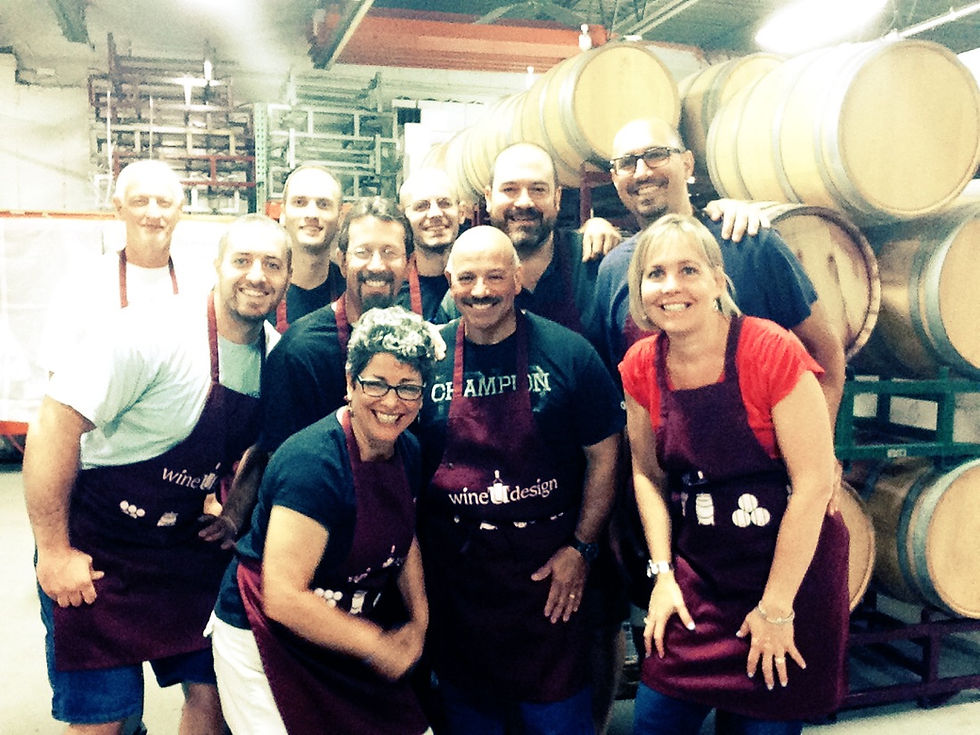
Wine blending is our answer for teams who want an activity adults actually look forward to, and it is how we run all of our team building on Long Island. Your team tastes our barrel-aged wines from California and Chile, then works in small groups, trying different proportions in trial glasses until each table agrees on its blend. The wine is bottled, corked and labeled, everyone takes a bottle home, and the session takes about 90 minutes. You can see how it runs on our wine blending experience page, or read how it differs from a standard tasting in wine blending vs wine tasting.
Many companies use the same session for client events, with hosts and guests working at the same tables, so the conversation flows around a shared task rather than a sales pitch. And where getting everyone to Hicksville is the hard part, our mobile wine truck brings a guided blending session to your office.
Team building FAQs
What is a good team building activity for adults who dislike team building?
Choose a worthwhile task with a result people keep, in small groups, with no forced games or personal sharing. Hands-on activities such as wine blending or cooking work well because they feel like a good afternoon out rather than an exercise.
How long should a team building activity be?
Around 90 minutes to two hours is enough for most teams, plus time for food afterwards. Longer events risk feeling like an obligation, particularly if they run into evenings or weekends.
What are good indoor team building activities for adults?
Wine blending, cooking classes, craft workshops and escape rooms all work well indoors and do not depend on the weather. The best choice depends on whether you want conversation, problem solving or a relaxed celebration.
Do people need wine experience for a wine blending session?
No. Most people who blend with us arrive with none, and our winemakers guide every step, from tasting the base wines to corking the finished bottle.
Choosing team building your team will enjoy
The team building activities that work for adults are the ones that respect people's time and intelligence: a worthwhile task, small mixed groups, a sensible length and something to show for it at the end. Decide what you want the activity to achieve, choose a format that suits the people taking part, and hold it at a time and place that most of the team can reach.
If you want an activity your team will look forward to, a blending session in Hicksville takes about 90 minutes, works for groups of 6 to 12 per table, and everyone goes home with a bottle they made. Tell us your group size and preferred dates on our team building on Long Island page and we will plan the rest.